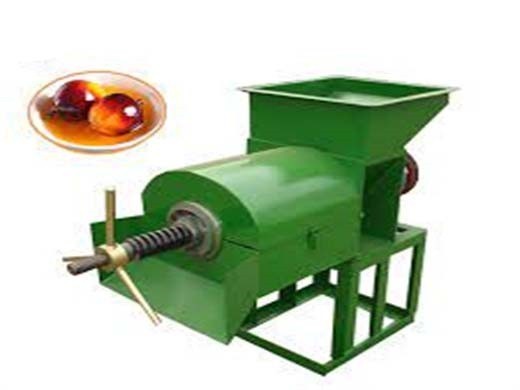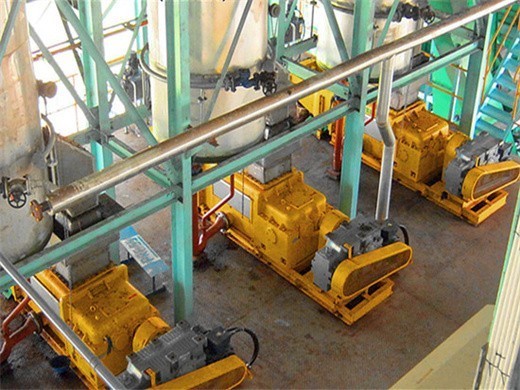
cold oil presser/mango seedoilmakingmachine/palm kernel expeller price in ghana

Unlike 3-MCPDEs, GEs can be reduced by converting them into harmless compounds
3-MCPD and its esters are formed in heat-processed, fatty foods from glycerols or acylglycerides in the presence of chloride ions.

The optimization resulted in more than 80% and 65% reduction of 3-MCPDE and GE levels, respectively with color
Get Price
Abstract Glycidyl ester (GE) and 3-monochloropropane-1,2-diol ester (3-MCPDE) are food contaminants formed during
Get Price
Both are tightly regulated in the EU. This guide explains how they form, the health basis and legal limits, the AOCS
Get Price
There are a variety of methods for reducing 3-MCPDE and GE. For example, water washing eliminates mostly
Get Price
One of the undesirable substances is not formed until the oil is being purified: a chlorinated alcohol by the name of 3-MCPD (3-chloro
Get Price
At Oil-Dri’s Nick Jaffee Center for Innovation, we employed a range of our bleaching earth products and investigated how they
Get Price
Influence of oil composition on the formation of fatty acid esters of 2-chloropropane-1, 3-diol (2-MCPD) and 3
Get Price
Particularly, crude palm oil washing is widely adopted to reduce 3-MCPDE, whereas double refining effectively targets
Get Price
The occurrence of esters of 3-monochloropropane diol (3-MCPD) and 2-monochloropropane diol (2-MCPD)
Get Price
Activated carbon and natural earth used in process can also reduce the 3-MCPDE level (Elisabeth, 2023). Likewise,
Get Price
Challenge for Food Oils : 3-MCPD and Glycidyl Esters Occurrence in food oils first reported mid of 2000’s Were considered as
Get Price
Adequate soap removal, oil washing, and oil drying facilities may be required to improve mitigation. Abstract Esters of 3
Get Price
3MCPD mitigation Edible oil producers can reduce 3-MCPD and GE formation throughout the value chain – from the
Get Price
During thermal processing of edible oils containing chlorides, 3-MCPDE may be formed from DAG or TAG. Chloride
Get Price
The 3-Monochloropropane-1, 2-diol ester (3-MCPDE) and glycidyl ester (GE) are formed at high processing
Get Price
Healthier palm oil Solutions for reducing 3-MCPDE esters and glycidyl esters in palm oil processes Balancing food safety, economy
Get Price
3-MCPD and GE mitigation issues explained by Alfa Laval’s edible oil expert | A webinar On 7 May 2020, our edible oil
Get PriceAbstract Refined, bleached and deodorized palm oil (RBDPO) is reported to contain high amount of 3
Get Price
Perform®6000 2.8 High The findings of this study support what is commonly understood regarding 3-MCPD and GE generation.
Get Price
Influence of precursors on the formation of 3‐MCPD and glycidyl esters in a model oil under simulated deodorisation
Get Price
EU has proposed 1.25ppm 3-MCPD and 1ppm GE for most oils and 2.5ppm 3-MCPD for “other oils” i.e palm oil.
Get Price
It is important to note that the levels of 3-MCPD and GE in palm oil can also be significantly influenced by processing
Get PriceThe washing process was carried out in two ways, namely wet washing by using water, and dry washing by using
Get Price
This study aimed to develop a mitigation strategy for the formation of 2-monochloropropane-1,3-diol esters (2
Get Price
Only few studies have been performed on mitigation of 2- and 3-MCPDE and GE in organic oils, specifically on organic
Get Price
3MCPD mitigation Edible oil producers can reduce 3-MCPD and GE formation throughout the value chain – from the
Get Price
The mitigation of 3-MCPDE and GE in RBDPO is quite challenging for palm oil refineries in producing a good quality
Get PriceGE GE is is the the contaminant contaminan resulting from the diacylglycerides (DAG) (DAG) reacting with reacting with high h
Get Price
3-monochloropropane-1,2-diol esters (3-MCPDE) and glycidyl esters (GE) are contaminants that can occur in edible oils, such as
Get Price
The report found that 2- and 3-MCPD and glycidyl esters are constantly highest in palm oil/fat while other vegetables oils containing
Get Price